How to start a pet sitting business (worked numbers)
How to start a pet sitting business, with our startup budget, drop-in and overnight pricing, the year a holiday calendar gives you, and the clients it takes.
On this page
- On our planning figures a pet sitting business starts on about $700 of first month cash, and the kit and a pet first aid course pay back in 12 drop-in visits.
- Pet sitting demand follows when your clients travel, so on our model 12 holiday weeks bring in about half of a year's sales.
- An overnight pays the least per hour of anything you sell, yet on our model overnights add about $11,400 a year because they use hours no drop-in can.
- A full pet sitting year takes about 56 households, roughly five times the regulars a dog walker needs, because each one only books when they go away.
To start a pet sitting business you need a registered business, insurance that covers the pets in your care and the keys you hold, a pet first aid course, a priced list of visits, and somewhere for bookings to land. On our planning figures that takes about $700 of first month cash, and the kit is paid back in 12 drop-in visits. The thing that decides the size of the business comes later. A pet sitter is only needed when the owner is away, so your year follows other people's holidays.
We build the software that small local service businesses run their bookings and rebooking on, and pet care is where we started, so treat this as our view rather than neutral advice. Every figure below is our own arithmetic on a stated model. Put your own prices and minutes in and re-run it.
All figures are in US dollars as a reference point. The arithmetic works the same in any currency.
How much does it cost to start a pet sitting business?
Very little up front. These are our planning figures, not quotes, so check prices where you buy.
| Item | What it covers | Our planning figure |
|---|---|---|
| Kit | A pet first aid kit, a key safe, a torch, spare leads, cleaning spray, a lint roller | $200 |
| Pet first aid course | One course before the first client | $100 |
| Fixed running costs | Insurance, phone, software, replacing worn kit | $250 a month |
| Per visit costs | Fuel and card fees, at about $2 a visit or night | about $160 in a first month |
| First month cash | Kit, course and one month of running costs | about $700 |
The $300 for kit and the course comes back in 12 drop-in visits at $25, or four overnights at $75. Registration fees vary by place, so add yours.
What services should a pet sitter offer?
Two, priced separately, because they use your time in very different ways.
Drop-in visits. A 30 minute visit to feed, let out, clean a litter tray and give medication, priced at $25 on our model. With the drive there and back it costs about 45 minutes of your day. Pets need visits in three windows, roughly 7 to 10 in the morning, 11 to 3 at midday and 5 to 8 in the evening, which together hold up to 13 visits.
Overnights. You sleep at the client's home from about 8 in the evening to 7 the next morning, priced at $75 on our model. That is 11 hours for $75, about $6.80 an hour, against about $33 an hour on a drop-in. On a per hour view the overnight looks like a bad deal.
It is not, and the reason is the most useful thing in this post. The overnight sits in hours that no drop-in can use. Nobody books a 2am feed. So the night is income added on top of a full day of visits, not instead of it, and you can sell only one a night.
How much can a pet sitting business make?
The model, stated so you can argue with it. Drop-ins at $25 and overnights at $75. Twelve peak weeks a year, the school holidays and the big public holidays, when you do eight drop-ins a day, seven days a week, and an overnight every night. Thirty-six ordinary weeks with 20 drop-ins and two weekend overnights. Four weeks off, taken outside the peaks. Costs of $3,000 a year fixed plus $2 for every visit or night.
| Year plan | Visits and nights | Sales a year | Costs | Left before tax |
|---|---|---|---|---|
| Drop-in visits only | 1,392 visits | $34,800 | $5,784 | $29,016 |
| Drop-ins plus overnights | 1,392 visits, 156 nights | $46,500 | $6,096 | $40,404 |
| Plus 30 drop-ins in ordinary weeks | 1,752 visits, 156 nights | $55,500 | $6,816 | $48,684 |
Two things fall out of the table. A peak week brings in $1,925 and an ordinary one $650, so the 12 peak weeks, a quarter of your working weeks, bring in about half the year's sales. And the overnights add about $11,400 left over, which is the gap between the first two rows, earned in hours you would otherwise spend asleep at home.
The cost of that is real. On this plan you sleep somewhere else 156 nights a year, including every night of every holiday. Decide how many of those you want before you sell them.
Is $40 a day good for dog sitting?
It depends on what the $40 buys. For a single drop-in visit it is above our $25 planning price. For a full day of care in the owner's home it is well under our model, where an overnight and one midday visit come to $100. Price the day by the visits and the night inside it, not as a flat day rate, and the number explains itself to the client.
Looking after dogs in your own home, often called boarding, is a different business with different rules and costs. We have not modelled it here.
How many clients does a pet sitting business need?
Far more than a dog walker, and this is the part most new sitters underestimate. A dog walking client books every weekday. A pet sitting client books when they go away.
Assume a typical client takes three trips a year of five days each. A drop-in client on two visits a day uses 30 visits a year, so the 1,392 visits in our middle row take about 46 households. An overnight client on the same trips uses 15 nights, so the 156 nights take about 10 more. That is about 56 households for one full year.
We worked through the dog walking version in how to start a dog walking business, where a full week is about 11 regular clients. Pet sitting needs about five times that list, and each client is worth less to you, about $750 a year for a drop-in household on our model.
Holidays are where it gets tight. The two weeks around Christmas and New Year hold 14 nights, and you can sell each one once. At five nights a trip that is fewer than three overnight clients. The sitters who fill it sell those nights in the autumn, to clients they already have.
How do you get your first pet sitting clients?
- Start close to home. Every client near you shortens the 15 minutes of travel inside each visit, and that is what decides how many fit into a window.
- Answer the trust questions before they are asked. Insurance, a meeting before the first booking, a written key policy and reviews from real clients. An owner is handing you their house as well as their pet.
- Give people a link, not a number. Owners plan trips in the evening, and they will not ring a stranger at 9pm. We made the full case in why online booking beats phone tag.
- Ask the groomer, the vet and the dog walker. They see the same pets every few weeks and hear who is going away. If you are weighing grooming as the first pet business instead, our version is how to start a dog grooming business.
- Sell the next trip at the end of this one. With 56 households who each book a few times a year, the list is the business. The longer argument is in how to get repeat customers.
Do you need a license to start a pet sitting business?
It depends where you work, so ask your local licensing authority what a pet care business needs before the first booking. Most places expect a registered business, as a sole trader, limited company or LLC, and liability insurance. Make sure the cover includes pets in your care and lost keys. Caring for pets in your own home is often licensed separately from visiting them in theirs. We answered the same question for the trade next door in do you need a license to groom dogs.
What we do for a new pet sitting business
The steps above need a price list with a duration on each visit, a booking link, a deposit on holiday dates, confirmations and reminders, reviews, and a way to tell past clients when the next holidays open. That is what we build.
Each kind of drop-in is a service with its own price and duration in managing your services. The hours you take visits in, your weeks off, and how far ahead clients can book are set in setting your availability, so a wide booking window lets Christmas visits be booked in the autumn. A deposit or full payment at booking, set in how you charge, means a holiday slot is only confirmed once it is paid for. Confirmations and reminders go out by email, as notifications lists. An email campaign to your past customers is how you tell 56 households the holiday dates are open. Reviews come from completed bookings and show on your site once you approve them, and referrals gives every client a link to pass to a neighbour.
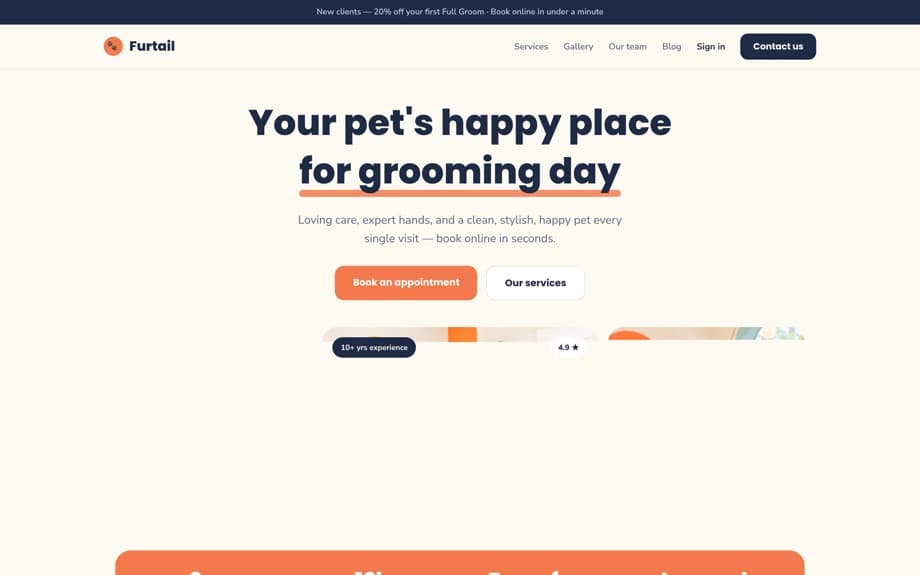
That is one of the live storefronts we run. It is a grooming salon, not a pet sitter. We have no pet sitting storefront yet and would rather say so than show you a mockup. To an owner it is the same kind of business: a pet, a priced list of services and a button to book.
Our booking page sells timed visits, so arrange overnight dates with each client directly and keep the daytime visits on the booking page. We do not plan your route or hold keys for you. You can put a test booking through the live demos to see the whole loop, or read how we built it for pet businesses on the pet groomers page.
The short version
A pet sitting business starts on about $700 on our figures and pays back its kit in 12 drop-in visits. Your year follows your clients' holidays, so 12 peak weeks bring in about half the sales, and overnights add about $11,400 because they fill hours no visit can. A full year takes about 56 households, so the work is building that list and selling the holiday dates before they come round.
More on this trade will sit in the pet sitting hub, and other trades' first customers are in get more customers.